Overview

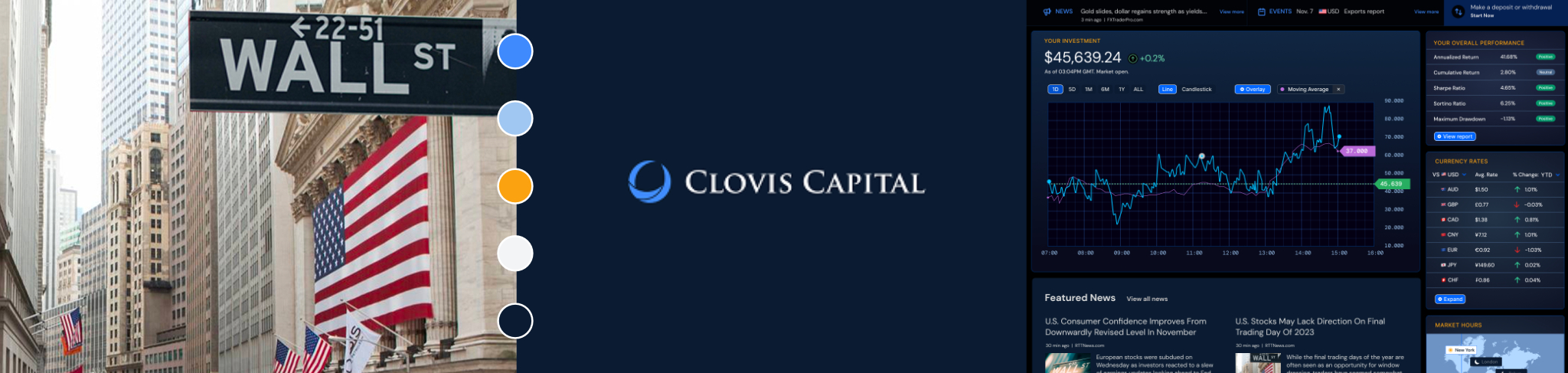
Clovis Capital’s platform surfaced performance data, portfolio insights, and AI-driven trading signals for accredited investors. The primary challenge was presenting dense financial information in a way that felt approachable, credible, and easy to scan — without oversimplifying the data.

My work focused on translating complex requirements into a structured, modular UI system that supported clarity, trust, and future product growth.

Challenge

Investor platforms often overwhelm users with charts, tables, and metrics competing for attention. The UI needed to:

  • Present complex financial data without cognitive overload

  • Establish trust through visual consistency and restraint

  • Clearly separate primary metrics from supporting details

  • Support future feature expansion without redesigning core layouts

The interface needed to feel institutional and reliable, not experimental or consumer-focused.

Solution

To address the challenge of presenting complex financial data in an approachable and trustworthy way, I focused on clarity, hierarchy, and modularity:

TOOLS

  • Figma
  • Mobbin
  • Illustrator

Industry

  • Finance
  • Investments

Design Strategy

The UI approach focused on visual hierarchy, simplicity, and modular design:

1. Clear Data Presentation

Performance metrics, portfolio summaries, and AI-driven insights were organized into scannable components — including cards, charts, and tables — that reduced cognitive load. By structuring content into bite-sized visual modules, users could quickly interpret high-level trends before exploring detailed data.

2. Intentional Visual Hierarchy

A restrained typography system and generous spacing helped establish priority and flow across complex screens. Key figures (e.g., returns, risk metrics) were visually prominent, while secondary details were intentionally subdued to prevent distraction. This created a trustworthy and professional feel suitable for sophisticated investors.

3. Modular Components for Scalability

UI components — such as cards, tables, and chart modules — were designed to be reusable and consistent. This not only improved efficiency during design and development but also prepared the interface to scale as additional investment tools and analytics were introduced.

4. Interactive Prototyping

Interactive prototypes were built in Figma to demonstrate core flows, transitions, and interactions. These prototypes helped clarify how users would navigate between dashboard overviews, performance drill-downs, and strategy insights — and ensured alignment with stakeholder expectations early in the process.


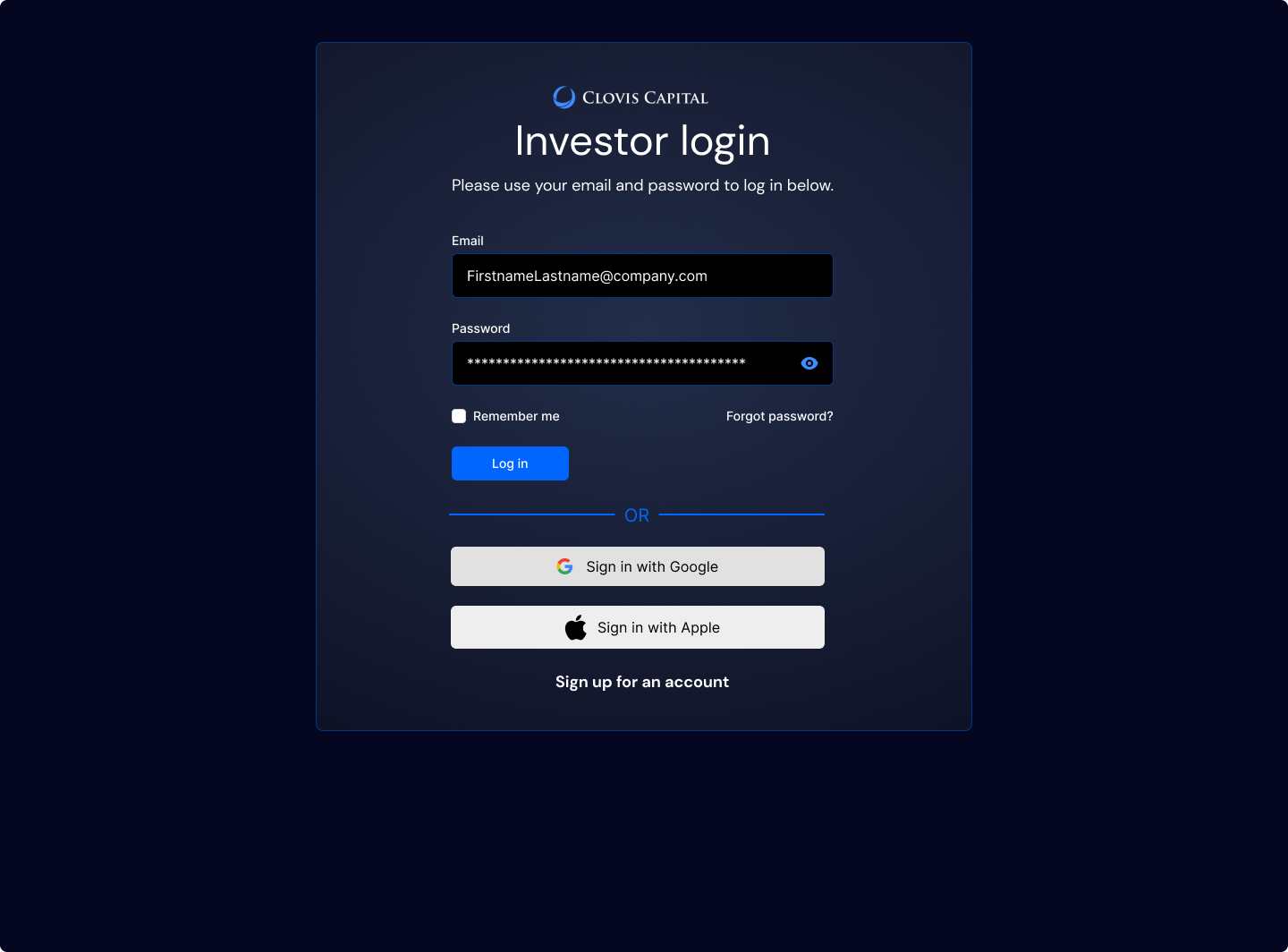
Login page

The login page serves as the primary entry point for investors, making security, clarity, and trust critical. The legacy page featured a simple sign-in widget, but it lacked hierarchy and context for users.

UI Solution:

  • Positioned the login form prominently in the hero section to immediately orient users.

  • Used clear labeling, input focus states, and subtle visual cues to reinforce security and guide interaction.

  • Included contextual links for forgot password, help, and account support without cluttering the interface.

  • Balanced visual hierarchy so the login form stood out while maintaining brand credibility.

Main Dashboard

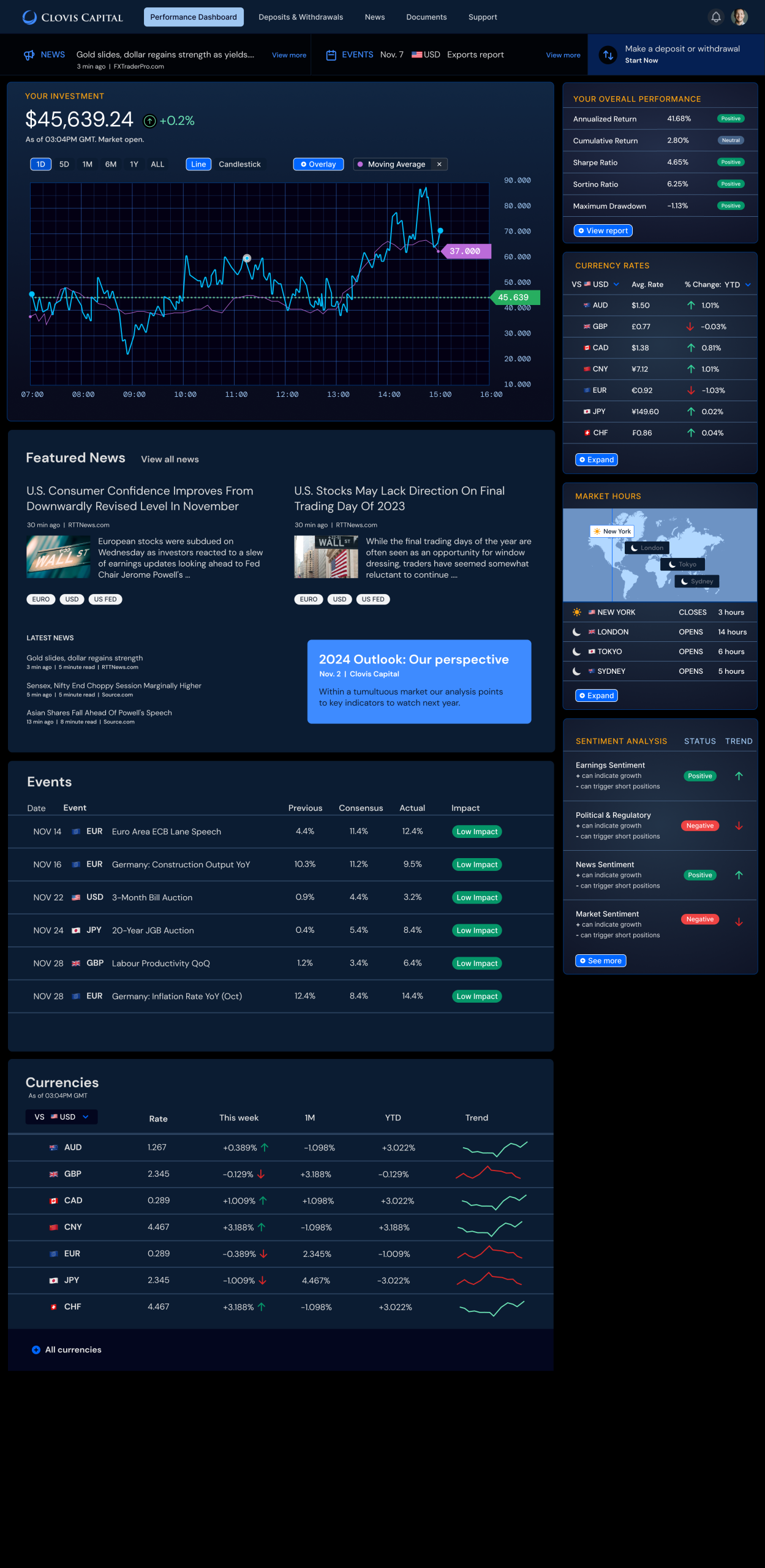
The dashboard is the central hub for investors, providing an at-a-glance overview of portfolios, performance metrics, and AI-driven insights. The challenge was presenting dense, complex data in a way that is immediately understandable and visually balanced.

UI Solution:

  • High-level metrics first: Key portfolio figures, account balances, and performance trends are prioritized at the top using larger, bold typography and prominent placement.

  • Sectioned layout: Data is grouped into logical modules (e.g., account overview, performance trends, recent activity) to reduce cognitive load and help users quickly locate information.

  • Interactive charts and tables: Users can drill down into data without leaving the dashboard, with charts designed for clarity and consistency in color and labeling.

  • Modular components for scalability: Cards, tiles, and data modules are reusable, enabling expansion of dashboard features without redesigning the core layout.

  • Consistent visual language: Typography, spacing, and color schemes were applied consistently to reinforce trust and professionalism across the interface.
Deposits and Withdrawals

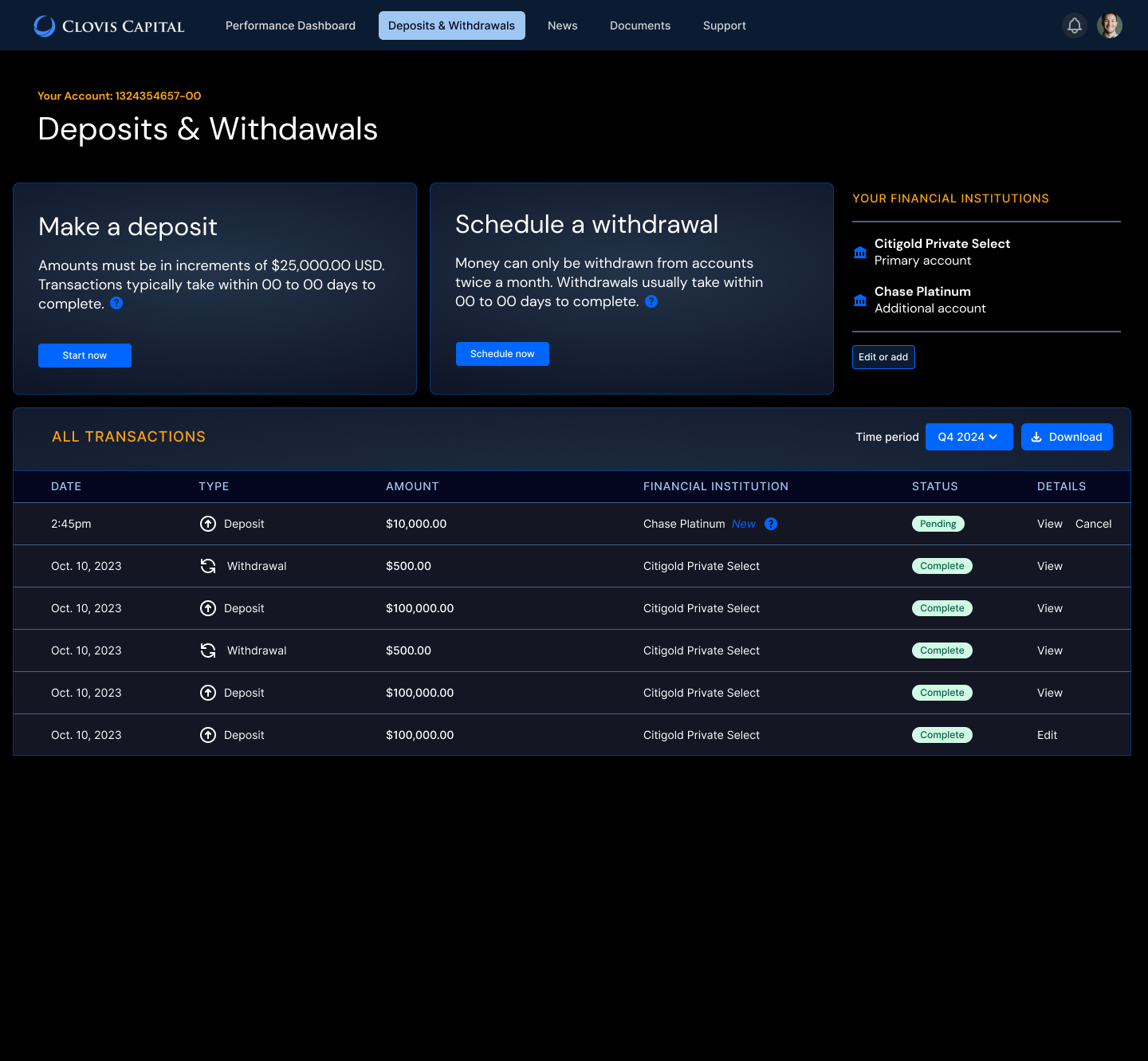
The deposits page needed to communicate financial actions clearly while reducing cognitive load for investors. The original layout presented dense tables and text-heavy instructions.

UI Solution:

  • Organized transaction history and current balances into scannable cards and tables.

  • Highlighted critical metrics like available balance and recent deposits using visual hierarchy.

  • Used consistent spacing and typography to make complex data approachable.

Deposit page

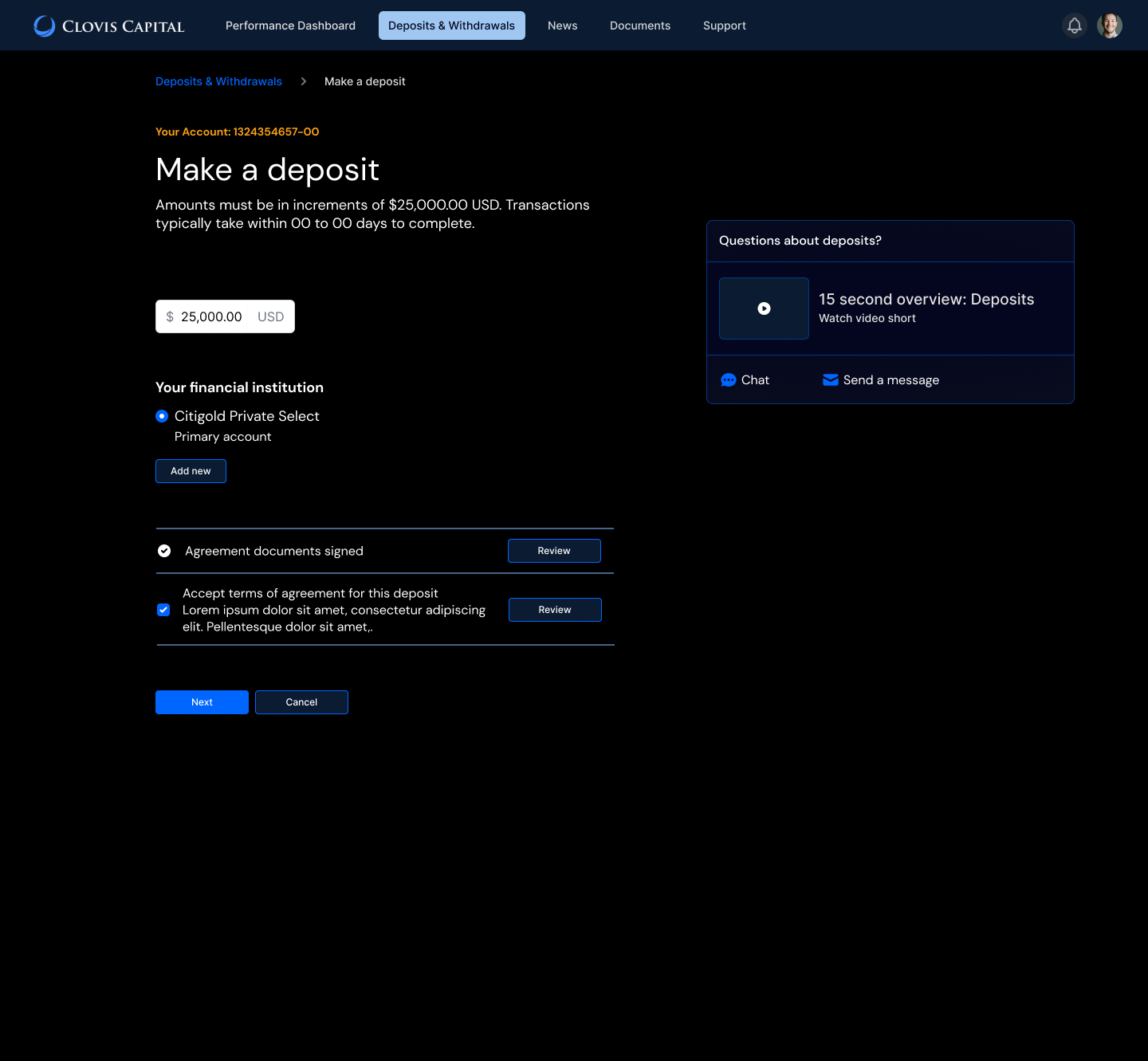
The deposits page needed to communicate financial actions clearly while reducing cognitive load for investors. The original layout presented dense tables and text-heavy instructions

Moving forward

While the platform’s UI successfully improved clarity, hierarchy, and usability, there are several opportunities to enhance the experience and scale the system:

  • Feature Expansion: Introduce additional tools, such as portfolio projections, AI-driven recommendations, or scenario modeling, while maintaining the modular component system.

  • Enhanced Interactivity: Add richer interactive visualizations, tooltips, and drill-downs to allow investors to explore data more deeply without leaving the dashboard.

  • Mobile & Responsive Optimization: Extend the design to support tablet and mobile devices with adaptive layouts and touch-friendly interactions.

  • Personalization & Customization: Allow users to tailor dashboard modules and preferred views to focus on the metrics most relevant to their investment strategy.

  • Continuous UI Iteration: Collect user feedback and analytics to inform iterative updates, ensuring the interface evolves with investor needs and emerging fintech trends.

This forward-looking approach emphasizes scalability, usability, and long-term value — demonstrating your understanding of UI as an evolving product layer rather than a static design.